Posts

Turning blank walls into works of art

Image
A mural painted by Mexican artist Irving Cano Walls – they create barriers, could be seen as divisive, may draw a line between two extremes. For some, they are a blank canvas waiting to be splashed with vivid imagination and colours. These expressions are oft wild, rebellious, and a work of a free spirit – perhaps an oxymoron to the cold, restrictive space in brick and mortar. These expressions seek to unify the diverse and divided world. From Thailand to Turkey to Norway, closer to home in San Juan, New York, street art is transforming the mundane into the wild. “Street art is nothing else but urban poetry that catches someone’s eye,” says Christian Guémy (C215), French street artist. “Being a street artist is impossible because the city itself is the artist. Street art is a collective thing, participative and interactive, extremely linked to web 2.0 culture.” Irving Cano, growing up in Isthmus of Tehuantepec, Oaxaca, Mexico, gravitated to street art when he was 16. “There was a graff...

Treading on cobbled stones in San Juan

Image
Capitolio de Puerto Rico, the legislative assembly  History. The word most times reminiscent of yellowing pages of books, oft-forgotten expanses of time. In the alleys of San Juan, Puerto Rico, the hands of the clock stand still in a time and era when pace of life was a gingerly trod cobblestone street, and aromas of pungent spices mixed with the subtle breeze of the Atlantic Ocean. San Juan, one of the oldest cities in the continental United States, is tucked away from the bustling Condado district; high-rises, stores, and shops, clubs and shiny, swanky cars transition to an elevation, where the old city appears, the tar of the road giving way to the cobblestone streets. This old city is a mix of 400 years of urban development, which has a confluence of varied eras of Spanish influence - Gothic, Renaissance, and Baroque architecture - which encapsulates arches, drones and ornamentation on the facades of the structures. Known as La Ciudad Amurallada (Walled City), San Juan has one ...

Republic Day – Celebration of power of people

Image
ANI Photo: Indian Army camel mounted division  On January 26, 1950, India declared itself a sovereign, democratic and republic state, with the ­adoption of the Constitution, which gave the citizens of India the power to govern themselves by choosing their own Government. It has been 73 years since, the world’s largest democracy has evolved, gone through its trials and tribulations, and managed to overcome them all.  Republic ­– a word that is right now, and especially in the Caribbean, generating a lot of buzz. Closer to home, after Barbados became a republic in November 2021, the push for Jamaica to remove the Queen of England as the head of the state has picked up momentum.  “Living in one of the most vibrant democracies on the planet, Jamaicans will relate to this special day of the world’s largest democracy even more,” said Rungsung Masakui, high commissioner of India to Jamaica. “It is not a mere coincidence that India and Jamaica share such a warm relationship despi...

The art and science of Ayurveda

Image
  Photo courtesy: High Commission of India in Jamaica Let us step away from the dreaded ‘C’ word that has engulfed us for the past couple of years and focus on one’s well-being, critically how Mother Nature provides both the means and the solutions to balance one’s life. Both an art and a science, one of mankind’s oldest forms of plant-based wellness and healing methodology from India, which dates back more than 5,000 years, is Ayurveda (translated as ‘the science of life’ in Sanskrit), also referred to as ‘Mother of All Healing’. Ayurveda finds mention in the ancient Vedic culture, and its knowledge was passed down orally from the gurus (masters or teachers) to their disciples for many thousands of years. This practice of wellness places emphasis on prevention and encourages the maintenance of health through close attention to balance in one’s life, right thinking, diet, lifestyle, and the use of herbs. It is said that knowledge of Ayurveda enables one to understand how to create ...

Marigold – a mystical journey from Mexico to India

Image
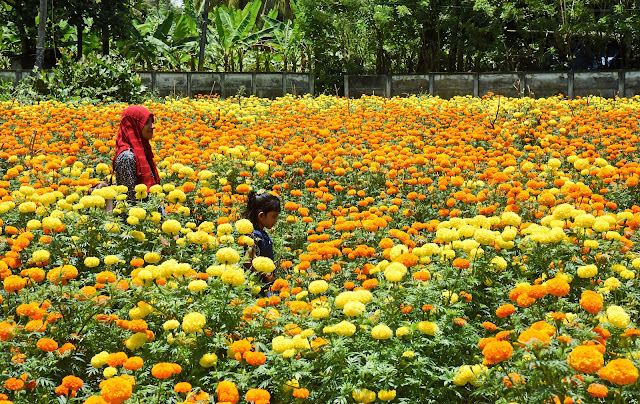
  People walk through a field of marigold ahead of the Onam festival, at Karumallur, Kochi, in Ernakulam. (ANI Photo) What do Día de los Muertos and a grand Indian wedding have in common? A bizzare question one may say, but the significance of the colour yellow and marigold flowers connect Mexico to India. There is no Hindu ritual that is complete without marigold. The bright-orange flowers are made into garlands and hung at the entrance of homes. The significance is manifold. First, the colour yellow symbolises sanctity, and saffron represents courage and sacrifice, which is also the top band of the Indian national flag. Likewise, in Mexico, offering marigold is a celebration of the lives of those who have passed on. The vibrant colours remind us of the never-say-die spirit, vibrancy, and looking beyond the sadness of death. Marigolds are used to decorate altars and are placed with personal effects, the deceased’s favourite food and drinks, making a connection with the souls who h...

Konark – an ode to the Sun God

Image
Konark Sun Temple panoramic view |   Alokprasad84   Sun – it is life, it is light, and the basis of existence of life on the planet. It is what makes the Earth and the constellations go around it. Sun has been revered and worshipped across civilizations, in many manifestations, from Aztec, Inca, Maya, Egyptian, to Buddhist, Arabian and Indian mythology. Praying to the Sun God, in its glory, is the beginning of a new day. The Sun Temple at Konark in the eastern Indian state Odisha is an architectural marvel. It is one of the awe-inspiring examples of temple architecture - as is visible from its grand conception, scale, and proportion, and in the consummate narrative power of its sculptural adornment. Konark, a UNESCO World Heritage Site , was built in 1250 CE by a famous king of the dynasty that ruled the region for more than 700 years. Although many portions are now in ruins, the site continues to draw tourists from all over the world. THE BELIEF Original temple and the ...

India at 75 – evolution of the national flag

Image
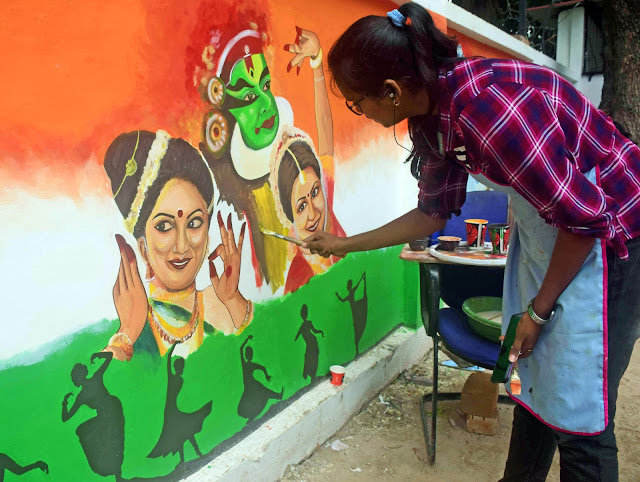
An art student gives final touches to a wall painting to celebrate India’s Independence Day, in Prayagraj (Allahabad), a city in the northern Indian state of Uttar Pradesh. | ANI Photo Every country has stories to tell, paths of history that it has walked on, and foundations upon  which its future is built. A country’s flag, is a symbol of its freedom and identity, and its inherent value systems – the Indian tricolour encapsulates them all. Let’s unfurl the story of the Indian national flag as the largest democracy in the world celebrates the 75th anniversary of its Independence on August 15. The national flag of India was adopted at the meeting of the Constituent Assembly, held on July 22, 1947, just before the country’s Independence from British rule. The ‘tricolour’, first the national flag of the Dominion of India between August 15, 1947 and January 26, 1950; that of the Republic of India thereafter. The Indian flag went through metamorphoses over the centuries. It was after t...