Posts

Showing posts with the label tradition

Las Posadas: re-enacting the journey to nativity
Image
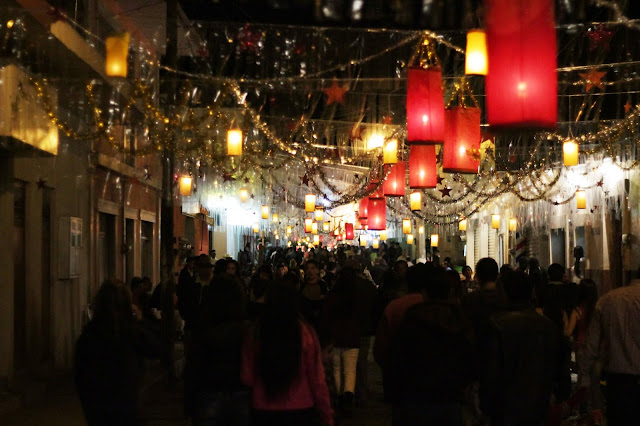
It is a party atmosphere post the processions - “Las Posadas” in Coalcomán, Michoacán, México. Photo courtesy Javier Marin Quiroz and Adriana López Ruíz. December – it is called the ‘best month of the year’ – for it is at the cusp of ushering in a new year, a time for retrospection and to celebrate the birth of Jesus Christ. The events of December 25, leading up to Nativity, may be over 2000 years old but it’s relevance and essence are still embedded in the DNA of a small town in the highlands of Mexico, 8,000 miles away from Bethlehem. “The celebration of ‘Las Posadas’ (posada means “inn” or ‘shelter’ in Spanish) is an important Mexican Christmas tradition and especially enacted in the town of Coalcomán,” said Manuel López, second secretary, Embassy of Mexico to Jamaica. The enactment, which is a fusion of road march by people in traditional dresses, and songs – in celebration, anticipation of the blessings that are to unfold, and an occasion for the community to come toge...

India Chronicles: Mud, wood, fire...food

Image
A roti is made on a clay skillet on a Chuhla, the traditional Indian clay oven. This phenomenon is slowly diminishing in the fast paced world, but some households are keeping this tradition alive Every evening, Savita Yadav religiously bathes, gets ready, goes into the corner of her home with a high zinc roof, the cemented courtyard lined with the pots of holy basil plants, pours ghee (clarified butter) on to the stack of fuel in a mud stove, strikes a match, waits for the fuel to burn, and puts an earthen ‘tawa’ (Indian flat skillet) on top.  The chulha (pronounced choo as in shoe, la as in large), a traditional Indian cooking stove, has been an integral part of Indian households for centuries, a rapidly diminishing phenomenon taken over by the gas stove and the more ‘funky’ microwave. “I started cooking on the chulha when I was seven years old,” said Yadav as she meticulously divided the kneaded dough, neatly packed in a brass vessel, and blew air from a hollow metal tub...

India Chronicles - Madhubani: A tradition of mythological proportions

Image
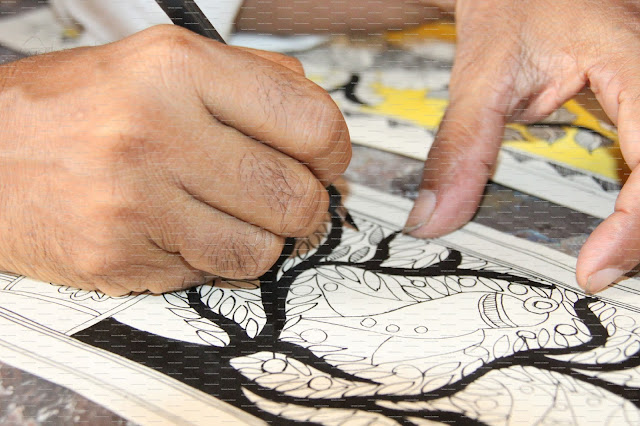
In north east India is a district, which is off the tourist grid, seeped in oft time warped traditions – Madhubani (translated as Forest of Honey – Madhu: honey, Ban: forest) – is the home, and lends its name, to the country’s foremost traditional painting genres, which dates back centuries. Rustic, traditional, and precise, each work tells a story – of the painter’s thoughts, dreams, aspirations, and critically giving life to Hinduism’s holy scriptures and deities. A mix of folklore, realism, celebrations, joy, and spiritualism, Madhubani is a personal statement of the artist, carrying on a tradition that has been handed down from generations. Ram Charita Paswan, is one of scores of painters who started dabbling with colours when he was six years old.  “I used to watch my grandmother paint,” the bespectacled, lean fourth-generation painter said. “I used to take cotton wool, tie it on a stick and try to dab paint on a paper, but I always ended up making a mess of th...

Hinamatsuri - celebrating girls

Image
Decked hina doll of the empress on display on the occasion of Hinamatsuri "I have always decorated the dolls since my daughter was small,” recalled Sayoko Takase, pointing  to the elaborate display of hina dolls, Hinamatsuri – or the Doll Festival, celebrating girls – which is about good health and future happiness.  Elegantly attired in traditional Japanese finery – silk kimono and jewellery – the hina dolls were intricately placed on a pedestal on March 3. “It (Hinamatsuri) is the celebration of health and happiness of girls, it does not matter how large the display of the dolls are, it is the thought that matters,” said Mrs Takase, wife of Japanese ambassador to Jamaica, Yasuo Takase. Her daughter, Yuria, is grown up now, studying in a University in Tokyo, but this occasion still finds relevance. “It is a celebration of being a girl, and I feel proud,” Yuria exclaimed. Hina doll of the Emperor The dolls, are not only pretty faces and grand attires, they ha...

Shamisen - Strings Of Tradition

Image
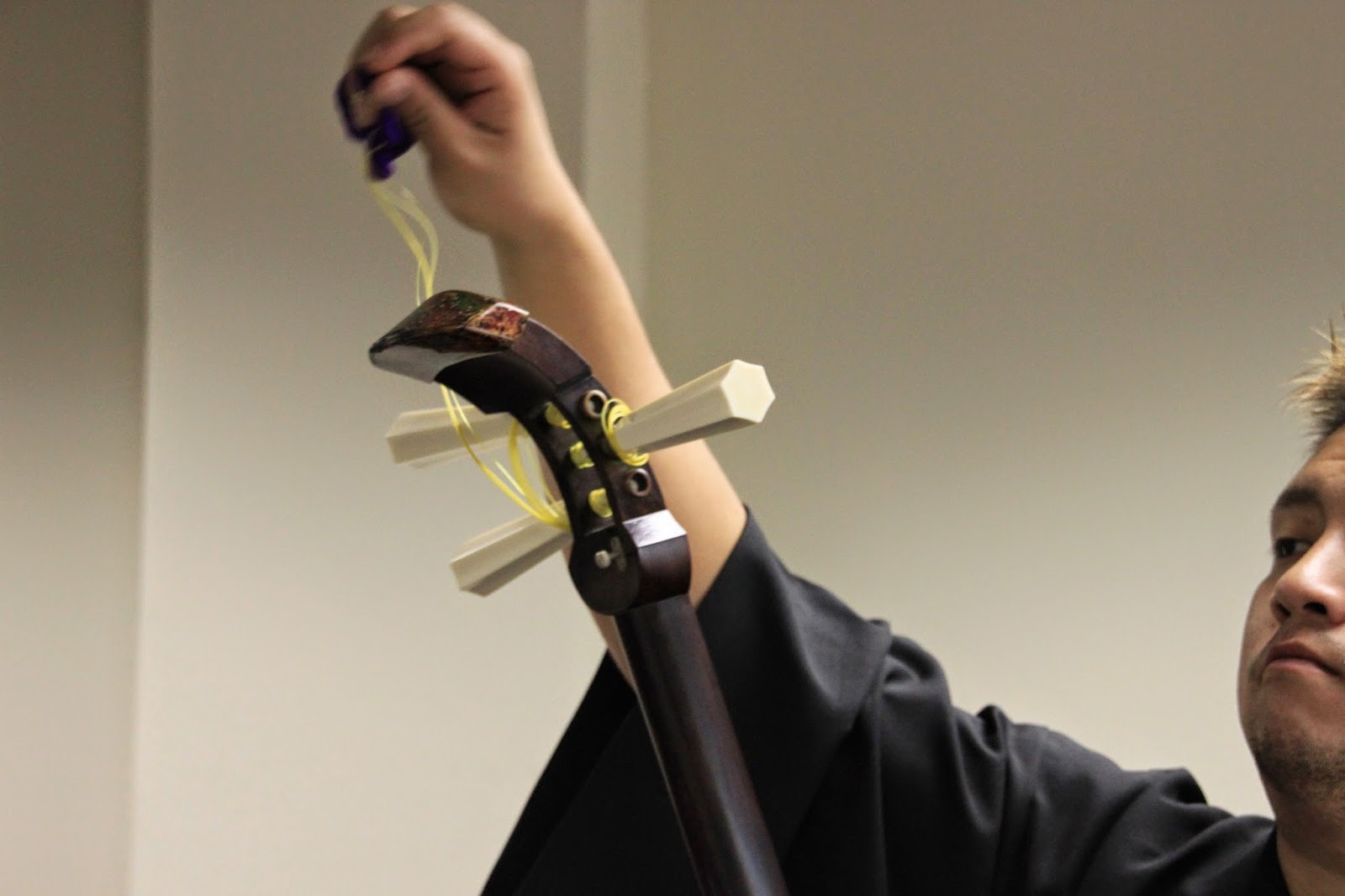
What does one get when one combines ivory, silk threads, red sandalwood, dog skin and tortoise shell? No, it is not a part of any ritual or ingredients out of a horror flick. They are the raw materials for the traditional Japanese plucked lute - shamisen. "The word 'shamisen' means three strings," explained Hidesaburo Abe, founder of Abeya folk music group. In the land of the Samurai, the shamisen is an integral part of the country's traditional folk culture. "There are a variety of shamisen in Japan," said Hiromoto Oyama, first secretary, Embassy of Japan in Jamaica. "The instrument has variants, according to the region and the kind of folklore that it is being played with." INDIAN ROOTS Shamisen traces its origins to Okinawa, south Japan, where it is said to have come from India. Musical instruments similar to the shamisen have been excavated in Mongolia. "The shamisen has a variety of sizes, but the shape is almost simi...