Posts

Showing posts with the label Mexico

Tequila – a Mexican cultural tradition

Image
  Master Distiller Jaime Villalobos “It’s another tequila sunrise, starin’ slowly ‘cross the sky ...” resonates lyrics of a song by The Eagles from Los Angeles, California – their inspiration lying 1,500 miles south in Tequila, Mexico, the warmth of which touched Kingston, Jamaica, recently with the maestro – master distiller Jaime Villalobos. “ Buenas noches señoras y señores, bienvenidos a este viaje a la tierra del Tequila (Good evening, ladies and gentlemen, welcome to this journey to the land of tequila),” Villalobos began, on the cata de Tequila. His presentation was in Spanish but, for any non-speaker, it wasn’t a blanking-out moment – his explanations flowed as smoothly as the ageing process of the brew of the evening. So much for nostalgia – one would guess that, for a non-drinker, this is as romantic as any cocktail would make anyone else feel. The genesis of tequila is agave, a plant that is central to Mexican culture. “Tequila will not be there if it was not for agave,”...

Naandeyé García Villegas – narrating social commentaries through her art

Image
Naandeyé García Villegas, Mexican artist who uses her creativity for social commentary. Naandeyé García Villegas’ earliest memories of delving into creative pursuits were ‘drawing’ letters on the earliest known Word program. The palette had a choice of four fonts and black and white colors to fill – minimalism driven by technology. “Since I was a child, I had a special interest in art. I drew a lot. I drew all the time,” Villegas said. “I loved the color and the letters. “When I was eight years old, my parents bought me a computer and a printer,” she said. “At that time, computers still didn’t have design programs, but mine had one installed where you could write things (I guess it was a kind of Word). It was just typography. I used to spend whole afternoons making signs, ‘designing’ them, then printing them, and finally, coloring on top of them (it had all kinds of markers, colors, watercolors, oil, etc.),” she said. This was the first taste of design for Villegas. A great deal has ch...

Turning blank walls into works of art

Image
A mural painted by Mexican artist Irving Cano Walls – they create barriers, could be seen as divisive, may draw a line between two extremes. For some, they are a blank canvas waiting to be splashed with vivid imagination and colours. These expressions are oft wild, rebellious, and a work of a free spirit – perhaps an oxymoron to the cold, restrictive space in brick and mortar. These expressions seek to unify the diverse and divided world. From Thailand to Turkey to Norway, closer to home in San Juan, New York, street art is transforming the mundane into the wild. “Street art is nothing else but urban poetry that catches someone’s eye,” says Christian Guémy (C215), French street artist. “Being a street artist is impossible because the city itself is the artist. Street art is a collective thing, participative and interactive, extremely linked to web 2.0 culture.” Irving Cano, growing up in Isthmus of Tehuantepec, Oaxaca, Mexico, gravitated to street art when he was 16. “There was a graff...

Marigold – a mystical journey from Mexico to India

Image
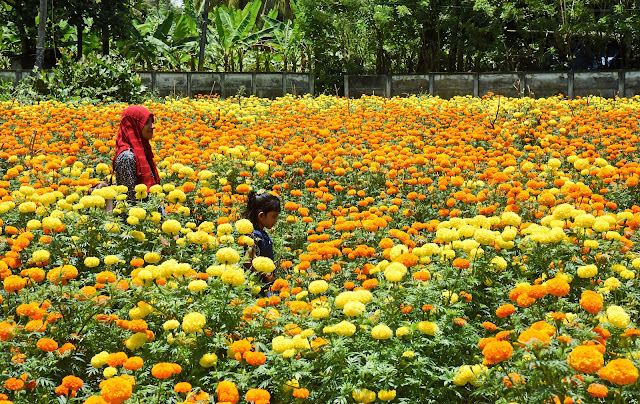
  People walk through a field of marigold ahead of the Onam festival, at Karumallur, Kochi, in Ernakulam. (ANI Photo) What do Día de los Muertos and a grand Indian wedding have in common? A bizzare question one may say, but the significance of the colour yellow and marigold flowers connect Mexico to India. There is no Hindu ritual that is complete without marigold. The bright-orange flowers are made into garlands and hung at the entrance of homes. The significance is manifold. First, the colour yellow symbolises sanctity, and saffron represents courage and sacrifice, which is also the top band of the Indian national flag. Likewise, in Mexico, offering marigold is a celebration of the lives of those who have passed on. The vibrant colours remind us of the never-say-die spirit, vibrancy, and looking beyond the sadness of death. Marigolds are used to decorate altars and are placed with personal effects, the deceased’s favourite food and drinks, making a connection with the souls who h...

Rediscovering the sunken Wickedest City

Image
Photo: Barba. SAS-I NAH --   Excavating an 18th Century wreck in the Caribbean Fables have been told and written accounts given about this enigmatic city, whose tales spread far and wide. Frequented by pirates – from the one-eyed to the wooden-leg ones (yes, we are taking some inspiration from Pirates of the Caribbean), sailors, wanderers, navy officers – Port Royal etched a name for itself.  The notorious Wickedest City, drowning in rum, loot, and debauchery, was engulfed by the sea – a powerful earthquake at around 11.40 a.m. on June 7, 1692. It is said that Three violent shocks, followed by a giant tidal wave, ripped the ground and within minutes, two-thirds of Port Royal sank under the rising waves. Fast-forward to 2022, Mexican archaeologist Roberto Junco, along with colleagues from Japan, Canada, and the Netherlands, among others, are on a mission.  “We are helping the Jamaican Government through the Jamaican National Heritage Trust (JNHT) to prepare the dossier for...

The Mayan enigma

Image
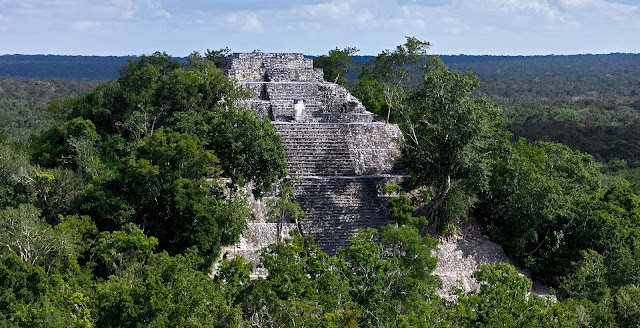
An aerial view of Calakmul in Campeche, Mexico.   Courtesy Embassy of Mexico in Jamaica There is an air of intrigue, a sense of awe, the fear of the unknown and epics that attain mythical proportions – the imposing structures of the Mayan civilisation nestled in the forests of Mexico are the earliest ­habitats of human civilisation that have witnessed ­history and its tribulations and still stand tall. “There are seldom things that words cannot describe, and the Mayan relics in Mexico are among those chapters of history that have withstood the test of time and still, I am sure, have people in awe as they did thousands of years ago,” said Ernesto Malda, deputy head of mission, Embassy of Mexico in Jamaica. We are sure that the people of Mexico – proud of their culture and heritage – concur with Malda’s words. The Mayan artefacts, particularly, encased in a time warp, would leave visitors mesmerised, only that the megapixel cameras of the smart phones have become the...

Día De Los Muertos: divine connection with departed souls

Image
Figurines of skulls lined up as a part of the Day of the Dead celebrations in Mexico. The tradition honours the departed souls.  Photo: Arturo Peña Romano Beyond the realms of popular culture, myths, fables, and perceived notions, customs, practices, and traditions that have their genesis in ancient civilisations, have deep rooted meanings, which personify and are key identifiers of a country or region’s belief system. The mention of Day of the Dead flashes images, often, unfortunately associated with the unleashing of the evil, sinister plots, spirits wandering in the graveyards, with wolves howling in stereophonic decibels … eerie. But, these images are far fetched from reality. Mexico, where Día de los Muertos (Day of the Dead) is observed, is the celebration of death and the reuniting of the living with their dead. This celebration is one of the most representative cultural expressions of the country. “It is a remembrance, a vehicle of communication and ...

Las Posadas: re-enacting the journey to nativity

Image
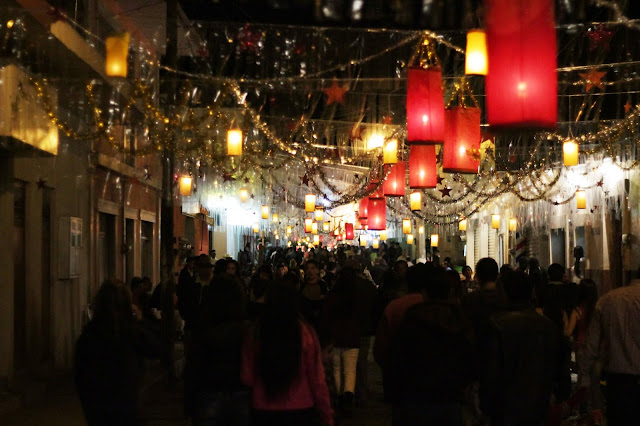
It is a party atmosphere post the processions - “Las Posadas” in Coalcomán, Michoacán, México. Photo courtesy Javier Marin Quiroz and Adriana López Ruíz. December – it is called the ‘best month of the year’ – for it is at the cusp of ushering in a new year, a time for retrospection and to celebrate the birth of Jesus Christ. The events of December 25, leading up to Nativity, may be over 2000 years old but it’s relevance and essence are still embedded in the DNA of a small town in the highlands of Mexico, 8,000 miles away from Bethlehem. “The celebration of ‘Las Posadas’ (posada means “inn” or ‘shelter’ in Spanish) is an important Mexican Christmas tradition and especially enacted in the town of Coalcomán,” said Manuel López, second secretary, Embassy of Mexico to Jamaica. The enactment, which is a fusion of road march by people in traditional dresses, and songs – in celebration, anticipation of the blessings that are to unfold, and an occasion for the community to come toge...