Posts

Marigold – a mystical journey from Mexico to India
Image
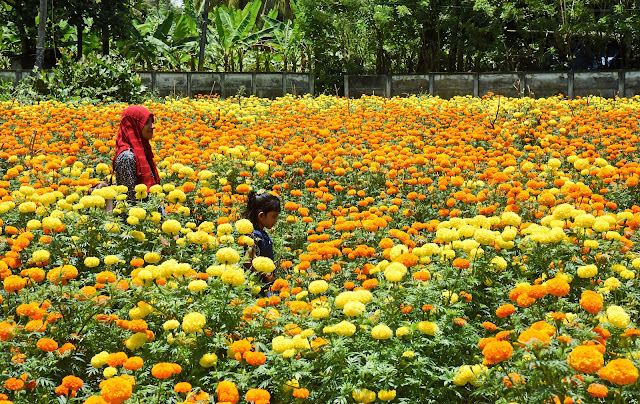
  People walk through a field of marigold ahead of the Onam festival, at Karumallur, Kochi, in Ernakulam. (ANI Photo) What do Día de los Muertos and a grand Indian wedding have in common? A bizzare question one may say, but the significance of the colour yellow and marigold flowers connect Mexico to India. There is no Hindu ritual that is complete without marigold. The bright-orange flowers are made into garlands and hung at the entrance of homes. The significance is manifold. First, the colour yellow symbolises sanctity, and saffron represents courage and sacrifice, which is also the top band of the Indian national flag. Likewise, in Mexico, offering marigold is a celebration of the lives of those who have passed on. The vibrant colours remind us of the never-say-die spirit, vibrancy, and looking beyond the sadness of death. Marigolds are used to decorate altars and are placed with personal effects, the deceased’s favourite food and drinks, making a connection with the souls who h...

Konark – an ode to the Sun God

Image
Konark Sun Temple panoramic view |   Alokprasad84   Sun – it is life, it is light, and the basis of existence of life on the planet. It is what makes the Earth and the constellations go around it. Sun has been revered and worshipped across civilizations, in many manifestations, from Aztec, Inca, Maya, Egyptian, to Buddhist, Arabian and Indian mythology. Praying to the Sun God, in its glory, is the beginning of a new day. The Sun Temple at Konark in the eastern Indian state Odisha is an architectural marvel. It is one of the awe-inspiring examples of temple architecture - as is visible from its grand conception, scale, and proportion, and in the consummate narrative power of its sculptural adornment. Konark, a UNESCO World Heritage Site , was built in 1250 CE by a famous king of the dynasty that ruled the region for more than 700 years. Although many portions are now in ruins, the site continues to draw tourists from all over the world. THE BELIEF Original temple and the ...

India at 75 – evolution of the national flag

Image
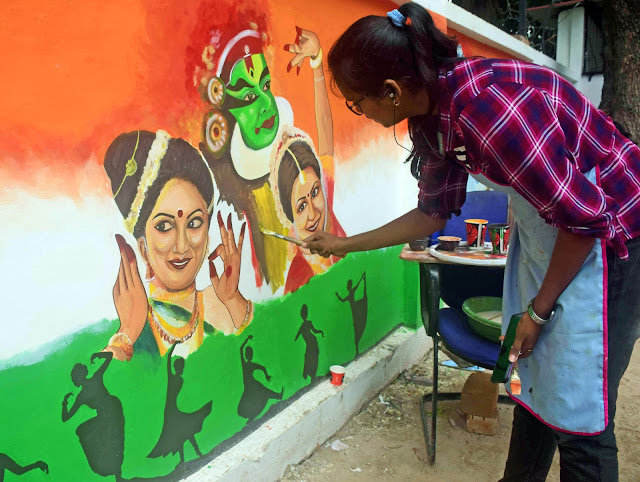
An art student gives final touches to a wall painting to celebrate India’s Independence Day, in Prayagraj (Allahabad), a city in the northern Indian state of Uttar Pradesh. | ANI Photo Every country has stories to tell, paths of history that it has walked on, and foundations upon  which its future is built. A country’s flag, is a symbol of its freedom and identity, and its inherent value systems – the Indian tricolour encapsulates them all. Let’s unfurl the story of the Indian national flag as the largest democracy in the world celebrates the 75th anniversary of its Independence on August 15. The national flag of India was adopted at the meeting of the Constituent Assembly, held on July 22, 1947, just before the country’s Independence from British rule. The ‘tricolour’, first the national flag of the Dominion of India between August 15, 1947 and January 26, 1950; that of the Republic of India thereafter. The Indian flag went through metamorphoses over the centuries. It was after t...

Postcard from Japan: Manhole covers - designs of urban art

Image
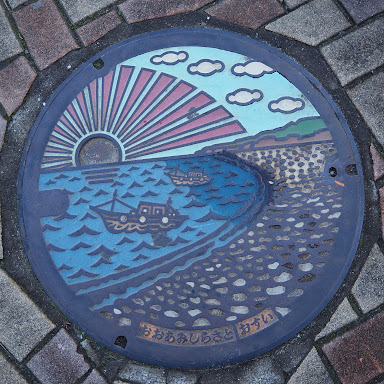
A manhole cover with sea, sun and a ship in Oami-Shirasato-city, Chiba prefecture, Japan. There are a couple of things that strike a chord with a visitor to the Land of the Rising Sun such as cleanliness, politeness, patience, meticulousness, precision and, there is creativity in every nook and corner of the country – from food presentations, to architecture to garbage receptacles and even manhole covers. No, the latter two examples are not raising any stink. They are reminders the beauty is indeed in the eyes of the beholder. Japanese love to walk. In Tokyo, sidewalks of the city that is home to 13 million, has a sea of humanity striding to and fro dressed in their impeccable, stylish, traditional and contemporary couture. One cannot help but set one’s sights to the ground and notice tastefully designed metallic circles making a ‘fashion statement’. On a normal day, these round covers would be best avoided, oft scurried past, with face covered – but then this is Japan, and there are c...

India Chronicles: Humayun’s Tomb - poetry etched in red stone

Image
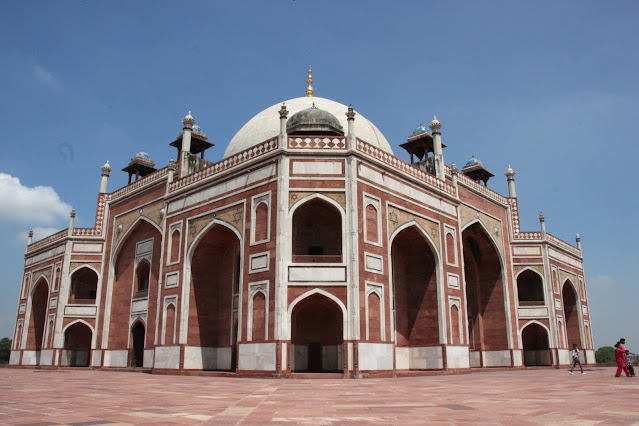
Humayun's Tomb in New Delhi Walks down the lanes of history, most of the time, evoke some inexplicable feelings – awe and being a time warp. As much as the word ‘history’ tends to be associated with long texts in books and hardly a subject that kindles exuberance, a visit to any of the these landmarks kindles some of the emotions we spoke about. It was an era in the time of the Indian subcontinent’s history when there was a convergence of Persian influences in architecture. This imposing monument is tucked behind a façade of thick red stone walls. The Humayun’s Tomb, a magnificent structure in red stone, the pathway to which is lined with trees, in the midst of sprawling manicured lawns, the structure that unfolds before the eyes is opulent. The visitors can’t help but see the semblance to India’s most recognizable and iconic landmarks – the Taj Mahal. What many may not know is that Humayun’s Tomb, built in 1570, is the Indian subcontinent’s first garden-tomb and major architectura...

Mahatma Gandhi: Apostle of peace and his messages in ink

Image
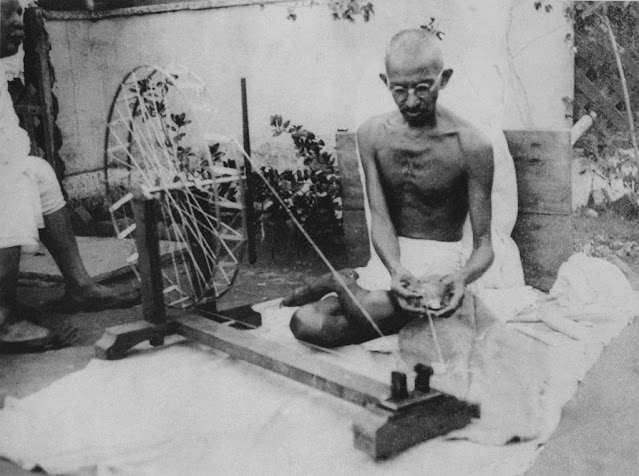
Gandhi spinning yarn on the charkha (wheel) - Wikimedia Commons  “My life is my message,” once said Mohandas Karamchand Gandhi – Mahatma Gandhi as he is known the world over. India's national leader, reformer was a great communicator. He connected with the masses, mobilised a whole country against the mighty British Empire and spearheaded India's quest for freedom. He recognised the power of effective communication to garner popular support. “Gandhi was successful because he had a latent skill in communication that surfaced in South Africa, where he had gone initially to set up practice as a lawyer,” said Prathit Misra, second secretary, High Commission of India in Jamaica. “What began in South Africa gave him the impetus to spread his message to the masses and rally millions of Indians.” Gandhi was a prolific writer and believed in the power of pen over the sword – promoting the principles of non-violence. To the world, the images of Gandhi – a frail-framed, modestly clad gent...

India Chronicles: Ellora Caves – spirituality carved on the hills

Image
The Indra Sabha, a part of the Jain caves at Ellora - Wikimedia Commons There is something about historical perspectives – they seldom cease to awe or intrigue us. As we talk of perspectives, the monuments across the world, from the pyramids in Egypt, the Great Wall of China, ancient cities of Rome and Athens, the mystique of Petra, are awe inspiring all. And then there is India, enriched and embedded in a civilization that is more than 4,000 years old, the length and breadth of the country is embedded with jewels of architecture, each with its unique characteristics and each having a story to relate. Ellora – home to a set of monasteries and temples, extending over more than two kilometres, is a far cry from the urban landscape of the city that never sleeps, India’s financial capital, Mumbai. It is encased in serenity and tells stories of three religions: Buddhism, Jainism, and Hinduism. Ellora Caves were carved out of massive rocks and mountain faces between 600 and 1100 AD. The site...